Every year, readers from across the country look forward to the release of the Farmers’ Almanac’s winter weather prediction. I’ve been known to grab a copy, or two, at my local grocer. This year, I decided to do some digging on the history behind this much loved publication and its weather forecasting abilities.
The Farmers’ Almanac was first published in 1792 during President George Washington’s first term as President of the United States. It’s our country’s oldest continuously published periodical and is currently published by Peter Geiger, son of Ray Geiger who was the longest running editor. What makes the Farmers’ Almanac special, beyond its history, witty prose and fun facts, is its weather predictions, which are created as far back as two year and cover a 16 month period.
The Farmers’ Almanac’s forecaster is the well-recognized name but unknown individual Caleb Weatherbee (since Caleb is, of course, a pseudonym). In this way, the publishers can keep secret the true forecaster’s identity to prevent her or him from being “badgered.” Also kept on the low down is the publication’s weather model. The Farmers’ Almanac states only that their forecasting method is an “exclusive mathematical and astronomical formula that relies on sunspot activity, tidal action, planetary position and many other factors.” Leaving me to wonder, do they also own a crystal ball?
While the publishers of the Farmers’ Almanac have historically boosted an 80 to 85% accuracy level in weather predictions, scientific studies of the much loved publication support a 50% accuracy rating. I, however, recall many winters in which the Almanac nailed the forecast for my geographical area. We are already experiencing some of its 2019-2020 season prediction as it unfolds in North America with early snowstorms in the mid-west and significant cold temperatures. How many posted pictures did we see this Halloween of Chicago covered in a blanket of snow?
“Get ready for shivers, snowflakes, and slush,” the publisher says of the 2019-2020 winter season. “Big chills and strong storms will bring heavy rain and sleet, not to mention piles of snow!”
“This could feel like the never-ending winter, particularly in the Midwest and east to the Ohio Valley and Appalachians, where wintery weather will last well into March and even through the first days of spring,” says Almanac editor Janice Stillman.
The Farmers’ Almanac is not the only weather forecaster to believe Mother Natures has lots in store for us in North America this winter. Frank Lombardo, CEO of WeatherWorks, a forecasting company I do follow closely, has similar predictions in his final report. [For another interesting article by WeatherWorks on the earliest snowfalls in the Northeast see https://weatherworksinc.com/news/first-measurable-snow-in-the-northeast-11-5]
Mother Nature is certainly unpredictable and maybe that is why there is such an allure for the Farmers’ Almanac’s weather predictions. In 1936, its editor Roger Scaife learned the hard way when he dropped the weather forecast from the publication. Sales declined, readers revolted and the weather forecast was quickly reinstated the following year at the Almanac. Perhaps Roger could have used a crystal ball that year to avoid his blunder.
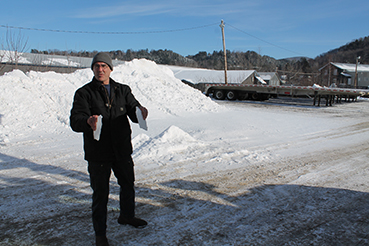
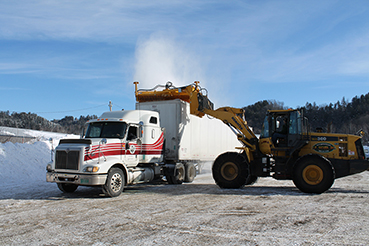
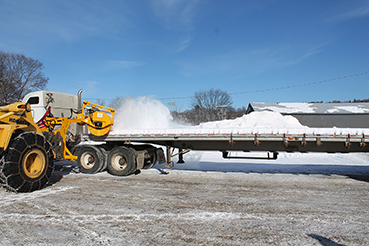
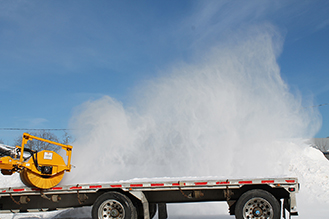
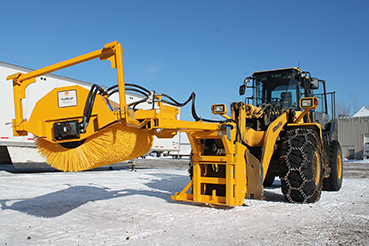
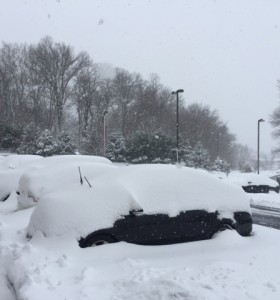 March 14th 2017 will be a day that many remember as Storm Stella hammered their community leaving a blanket of 2 feet of snow and covering up any signs of Spring. These blizzard conditions for the mid-Atlantic and Northeast remind us that March is still a month when major snow accumulations can occur. CNN reports that Stella has put 18 million under blizzard warning. Held up in my hotel room in Harrisburg to avoid missing the Pennsylvania Motor Truck Association’s Safety Conference this week, I’m reminded too at how these snow events wreak havoc on all modes of transportation. The airport in Boston as I left showed more ‘cancelled’ notices on the departing and arriving boards than I have seen in years. Talking with a friend who works for a large freight company I hear about the crazy amounts of work for their employees to redirect parcels from truck to rail to any means that will prevent the inevitable slowdown of the 24/7 cargo hum. Then there are the truck drivers seeking safe parking spaces to wait out Storm Stella, but as we all know, those parking spaces are becoming fewer and fewer in these areas. Only the municipal and snow service contractors’ plow trucks are out working hard to try to keep the main roadways clear. These unsung heroes of winter have a big challenge: Storm Stella’s fast and fierce snow falling, which is impacting visibility and their ability to stay on top of the snow clearing. At TrucBrush, we care about safety. We hope that after Storm Stella moves offshore that everyone will remember the importance of clearing snow off their cars, trucks, trailers and buses to prevent roadway hazards days after Stella is just a March memory. #driversafety #stormstella #transportation